This post is for adults who want truly easy journal drawings, not polished art or calligraphy or anything that requires school training. The easiest doodles are built from a circle, a rectangle, a triangle or one curved line. Doodling is an easy way to add creativity to journal pages, and beginners can start journal drawing with low-pressure techniques that take almost no time at all.
Every idea here can be drawn in a couple of minutes with basic pens, straight into a bullet journal or any notebook. Most of my own doodles take two to five minutes, and the simple ones are done before my coffee is. I put a small doodle in the corner of most of my journal pages, and I have done it long enough to know which drawings earn a spot and which I quietly stop attempting.
One thing that helped me relax about the whole business of doodling: the word “doodle” once meant a fool or simpleton before it came to mean idle little drawings. That is a wonderful reminder that a doodle is meant to be quick and a bit wobbly, not perfect. No art theory ahead, just concrete, copyable ideas and a few tips to keep mistakes from ruining a page. The Wikipedia entry on doodles has more on that history if you are curious.
Journal Drawings Easy: What You Need to Start Drawing in Your Journal
Journal drawings easy really can be that simple: small, quick doodles made from basic shapes with a pencil and one black fineliner, tucked into page corners, headers, borders, or little spaces on the page. If you keep a journal or bullet journal and want easy ideas you can copy without fancy supplies or advanced drawing skills, this is a good place to start.
I’m a minimalist with supplies. Early on I did most of my doodles with one pen and whatever notebook was nearby, and that is still the approach behind Page Corner Doodles. You do not need to purchase fancy tools or add extra cost to your life before you begin, especially if mistakes, bleed-through, or overthinking are what usually stop you.
Here is what I actually use:
-
A single black fineliner, 0.3 to 0.5 mm tip, for outlines and small details
-
A basic HB pencil, or a mechanical pencil with 0.5 mm lead for control, plus a softer eraser (using a pencil allows for easy corrections before you commit to ink)
-
Optionally, one brown or blue pen for small details
Paper matters more than people expect. Typical bullet journal paper runs from about 90 gsm up to 160 gsm. Paper under 90 gsm often bleeds with wet inks, while 120 gsm and above handles most pens without trouble. I always test pens on the last page of a new journal before committing to a full spread.
A few pens worth knowing about: the Faber-Castell Pitt Pen set includes various thicknesses for different line weights. The Staedtler Lumocolor Fine Point pen is refillable, which I love for its long life. The Tombow Fudenosuke Brush Pen comes in soft and hard versions if you ever want a brush line for doodles or simple calligraphy. But none of these are required at the beginning. Tracing paper helps beginners practice drawing shapes and improves drawing skills over time, and dotted paper is useful for tracing patterns from screens if you want to copy something you found online.
You’ll find easy doodle ideas for corners, frames, borders, banners, and month headers here, along with simple ways to add color, fix drawing mistakes, handle bleed-through, and build a small doodle library you can reuse. The point is to make your pages more personal and more fun without turning journaling into a shopping project for all the things journaling. Start tonight with any notebook and pen.
Easy Bullet Journal Corner Doodles to Try First
This section is a menu of quick drawings for the four corners of a page. Keep the first few small, about thumbnail size. I used to start too big and run out of room for my writing. Small doodles are easier to start with and easy to copy for beginners, and they also work well around notes.
-
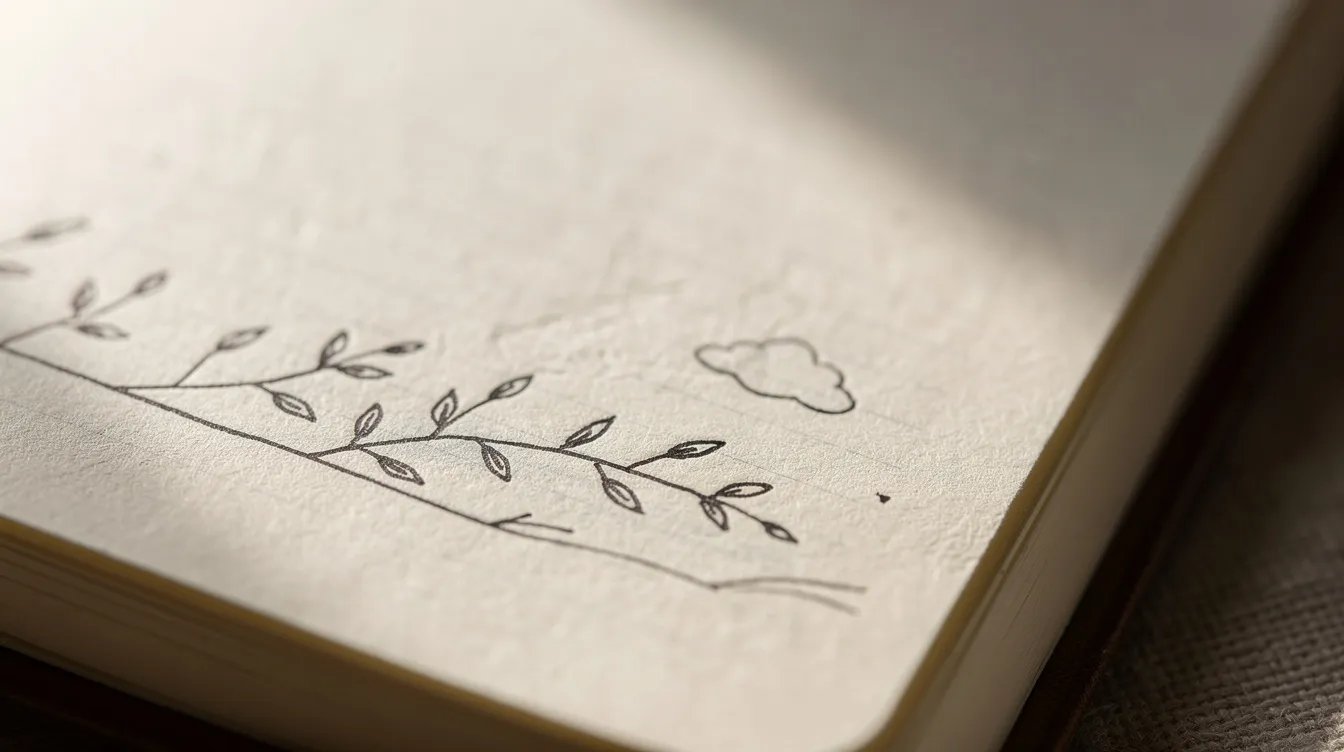
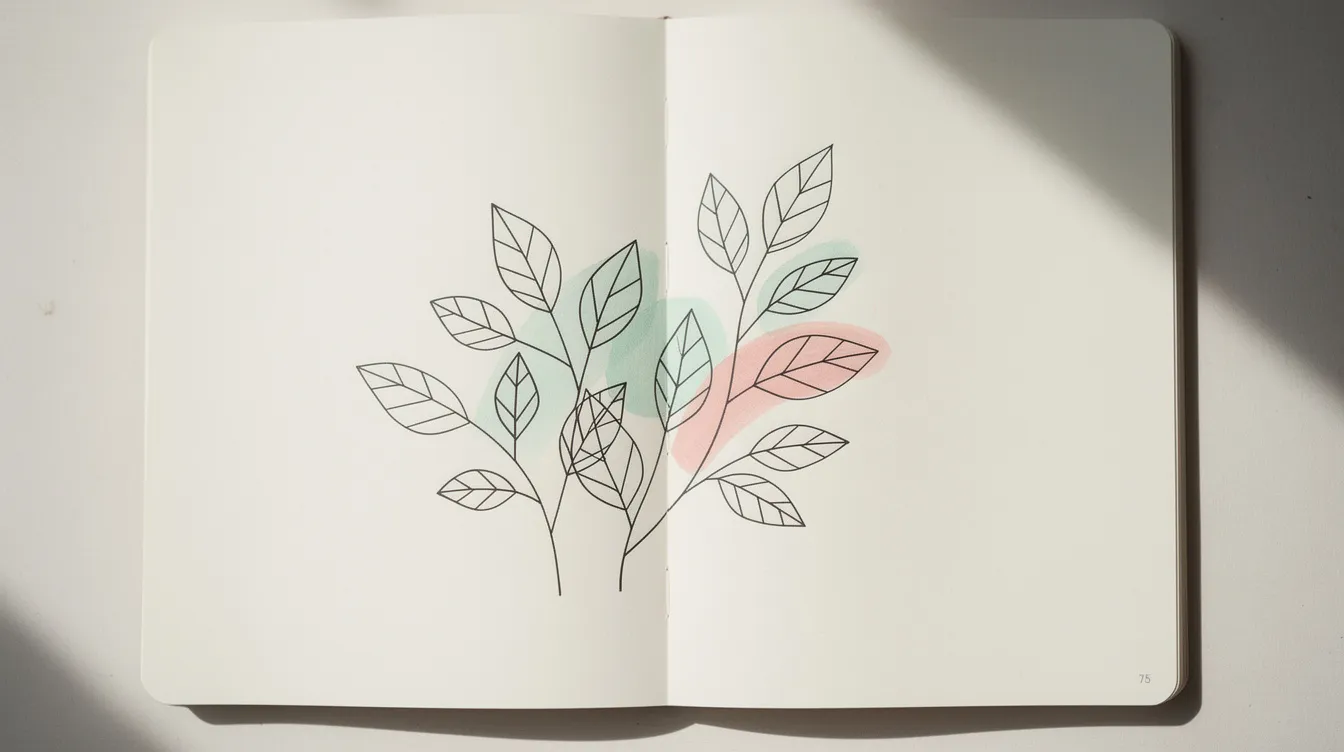
Leaf sprig. A curved line with five or six oval leaves, drawn in under a minute. A row of three leaves in different sizes also works as a divider. Drawing flowers is a common beginner doodle idea too, so let a sprig bloom into a tiny flower at its tip if you like.
-
Simple bookshelf. Three or four upright rectangles for books plus one plant pot. Great for reading logs or school class pages.
-
Rain cloud. A puffy cloud shape with simple straight rain lines, maybe one tiny lightning bolt on stormy days. Clouds never look wrong, which is why I love them.
-
Mug of tea. A tall U shape or rounded rectangle, a handle, three wavy steam lines, maybe dots for tea dust or spices. It is the one I put beside morning entries.
Pick just a couple of corner doodles and repeat them all month. I often pin a small moon or the same mug in one corner across a week of entries. It makes the journal feel connected and is the quickest way to get better at a shape. Practice drawing one shape at a time and you will see the lines steady on their own. Repeated patterns and doodles elevate the aesthetic of a journal without any extra effort.
I wrote a separate post about doodles for page corners, for readers who want more corner, border and month header ideas and more detail on placement.
Simple Borders and Frames That Always Look Neat
Easy frames turn daily logs, habit trackers and weekly spreads into something that feels finished, giving the page a clear finish. My own rule is that doodles live in a corner, along the bottom edge or beside a heading, so the center stays free for writing.
-
Double line frame. Draw a rectangle and echo it a few millimeters inside. Wonky lines are part of the charm.
-
Stitched edge border. A single rectangle with tiny diagonal dashes along the inside edge, like a sewn seam.
-
Dotted garland border. A thin line around the box with a small leaf or circle every one to two centimeters.
-
Broken line border. Short straight segments with small gaps. The gaps hide shaky hand movements.
-
Banner ribbon. A long rectangle with a smaller rectangle behind each end and notched tails. I use this most often as a page header with the date inside.
Borders can also rescue a messy page. Draw a new framed box right over the trouble spot and the rest of the page stays fine.
Theme Ideas: Easy Doodles for Common Bullet Journal Spreads
A journaling theme can dictate drawing prompts for better engagement, so here are specific doodles paired with typical pages. Tiny illustrations personalize journal pages, entries, and notes in a way that plain text cannot.
-
Monthly cover pages. A tiny calendar grid plus one simple motif. A sun for June, a bare branch for November, or a baby animal for a cute easy option. Cacti doodles are popular and simple to draw.
-
Habit trackers. Repetitive doodles such as tiny water glasses, book icons or dumbbells that can be colored in. I also put a tiny face beside a habit or a note to myself, just a circle, two dots and a small curve, with the expression changing by the day. Expressive emotions can be illustrated using colors and lines even at this small scale.
-
Mood trackers. A page of simple faces (happy, tired, annoyed) or tiny weather doodles that match each day, and these simple marks can be fun for kids too.
-
Reading lists. Stacks of books, open books with simple lines for text, or a bookmark ribbon down the margin.
-
Gratitude logs. Small hearts, envelopes or flowers in the corner of each daily box.
Quick vignettes like these can be used to document daily experiences, and incorporating doodles into writing enriches journal entries more than you might expect. It is a sign that your pages are becoming something you want to read back through.
How I Actually Draw These Doodles (Step Hints, Not Strict Rules)
I am not an artist or a teacher. When I started I tried to draw things as they looked, got stiff results and got discouraged. What changed things was treating every object as two or three basic shapes stacked together. Using simple geometric shapes is effective for beginner journal drawings, and simple shapes can be turned into many illustrations like flowers and houses.
-
Warm up on scrap paper. I draw each shape five or six times before committing it to the journal. By the third try the lines start to loosen. Using tracing paper also helps visualize drawing strokes before you go in with ink.
-
Pencil first, pen second for bigger or new doodles. Sketch only rough shapes, very lightly, so a thin page does not dent.
-
Basic shapes first. A rectangle becomes a book cover, or a mug with a loop handle, or a cactus with two smaller rectangles bent upward. Drawing everyday objects this way enhances observational skills over time.
-
Outline slowly with the fineliner. Slow, steady lines look neater than fast ones. Then add just one detail, like a shadow line or a few dots. More than that and the doodle feels crowded. Keep construction to three or four lines max. You might also try continuous contour line drawing, which involves drawing an object without lifting the pen, as a fun warm-up exercise.
Step-by-step tutorials simplify drawing for beginners if you want more structure. The Kawaii Doodle Class book, for example, includes five to six steps for each drawing. YouTube offers numerous step-by-step drawing videos, and step-by-step guides help practice drawing flowers and leaves, lettering, and calligraphy, while also helping keep letters even within a word. If you search for inspiration on Pinterest or any blog, you can find over 100 easy doodle ideas to copy and try.
I also wrote a post on cute doodling for beginners, for readers who want a gentler way in with small, friendly shapes.
Fixing Mistakes and Dealing With Bleed-Through
I make plenty of mistakes and prefer quick, low-stress fixes over starting a spread again. My most common one is smudged ink, nearly always because I rushed. Wait a minute for the ink to dry before erasing the pencil underneath.
-
Turn ink blobs into something intentional: a larger flower petal, a speech bubble or a blackout box. I abandoned doodles at the first crooked line for a long time. Now a crooked mug becomes a mug that has had a long day. Embracing imperfection in drawings can enhance creativity in journaling, and low-pressure art exercises help decrease the fear of making mistakes.
-
Cover a problem area with a label sticker or washi strip and redraw on top.
-
Accept ghosting on thinner paper, and save heavy double-sided doodles for thicker journals. Keep a “rescue spread” where you collage over a page that really went wrong, instead of tearing it out.
Adding Just a Couple Colors Without Overthinking
I mostly work in black and white with occasional color, because too many choices slow me down. Using limited colors can create a cohesive look in journal pages without any worry about clashing.
-
Choose only two mildliners or colored pencils per month and stick with that pair. Use color only in small areas: filling leaves, underlining headers or shading the inside of frames. Watercolor or mild markers can also be used as background techniques behind your ink doodles, adding a soft touch without overwhelming the page.
-
Test every new color on the last page for bleed-through before using it on a main spread. It is completely fine to keep journal drawings easy and monochrome for whole seasons. There is no need to turn every page into a rainbow.
Keeping a Doodle Library You Can Reuse
I use my own journal to collect doodles I like, so I am not inventing something new every time. This is where the ones worth drawing again live. Small, low-pressure visual habits like this enhance the journaling experience and save you from decision fatigue at the start of every page, and if your journaling also supports creative work, the library gives it a little Business-like consistency.
-
Dedicate one or two pages at the back to a “corner doodles” library with tiny labeled examples. Make a similar page for borders and frames, one box per style with the name written underneath, and add Links to related posts or reference pages beside each category if that helps.
-
Copy a few doodles from this post onto your library pages the same day you read it. Over 100 easy doodle ideas are available for beginners if you search online, so your library can grow as fast or as slowly as you like. Anyone can learn to draw with practice, and the library is proof of that when you flip back through it months later or reuse the same ideas in School notebooks or class pages.
There is nothing amazing or complicated about any of this. It is just a notebook, a pen, a few shapes repeated until they feel like yours, and the quiet fun of watching your pages fill up. That is really all it is.
FAQ
What is the easiest thing to draw in a journal? A cloud, a leaf or a simple heart. One or two lines, and they forgive wobbly edges.
Do I need to be good at drawing to doodle in a journal? No. Everything here is made from basic shapes, and the charm is the hand drawn look. Practice the same few drawings and they steady on their own.
What pen should I use for easy journal drawings? A black fineliner with a thin tip, around 0.3 to 0.5 mm. Test it on a spare page first to see if it bleeds through your paper.
How long does a journal doodle take? Most of mine take two to five minutes. The favorite ones get faster every time I draw them.
How can I make my doodles look more consistent? Stick to one pen, one line weight and a small set of shapes, repeated across several pages. That consistency is ready to show up after just a week or two.